Are Traditional Metal Braces Still the Best Choice?
When families visit us at Happy Braces Orthodontics in La Mirada, CA, one of the most common questions we hear is: “Should my child get braces or clear aligners?”
It’s a great question. Today, patients have more orthodontic options than ever before, and clear aligners can be a wonderful choice for the right person. But traditional metal braces are still one of the most reliable, effective, and versatile ways to straighten teeth and correct bite concerns, especially for younger patients or more complex orthodontic cases.
At our practice, Dr. Santos and Dr. Yousefi take time to walk patients and parents through the pros and cons of each option. Our goal is not to push one type of treatment over another. It’s to help you understand which approach is most likely to give you or your child a healthy, confident, long-lasting result.
For many patients, traditional braces are still the best fit because they are fixed in place, highly customizable, and excellent for cases that require more detailed tooth movement. They can also take some of the pressure off younger patients who may not be ready for the responsibility of wearing, cleaning, and keeping track of removable aligners every day.
Why traditional braces are still a trusted orthodontic option
Traditional metal braces have been used for generations, but that does not mean they are outdated. Modern braces are smaller, more comfortable, and more efficient than many people realize.
The biggest advantage of braces is that they are always working. Once the brackets are bonded to the teeth and the wire is placed, the system stays in place and gently guides the teeth into better alignment over time. Patients do not have to remember to put them in, take them out, or wear them for a certain number of hours each day.
That consistency can make a big difference.
With clear aligners, treatment depends on the patient wearing them exactly as instructed. For many patients, that means wearing them most of the day and night, only removing them to eat, drink certain beverages, brush, and floss. For responsible teens and adults, that can work beautifully. But for younger patients, it can sometimes be difficult to keep up with.
Aligners can be misplaced. They can be forgotten at lunch. They can be left in a napkin and accidentally thrown away. Some patients may also remove them more often than they should, which can slow down treatment or affect the final result.
With braces, there is no choice to wear them or not wear them. They are attached to the teeth, which means treatment continues throughout the day.
When metal braces may be the better option
Every smile is different, which is why orthodontic treatment should always be personalized. While clear aligners can be a great fit for many patients, traditional braces may be the stronger option in certain situations.
One of the most important factors is the complexity of the case. If a patient needs a lot of tooth movement, braces may give us more control. This can include cases with significant crowding, larger gaps, bite problems, or situations where the position of the tooth roots needs to be carefully guided.
Braces are also especially useful when treatment requires certain types of mechanics, including sliding movements. That simply means we may need to move teeth along the wire in a more controlled way. In cases like these, traditional braces can give us a predictable and steady method for guiding the teeth into the right position.
Another reason braces may be recommended is patient compliance. If we are concerned that a patient may not wear aligners consistently, braces can be a better choice. This is not about judging the patient. It is about choosing the option that fits their age, habits, lifestyle, and needs.
For younger patients especially, braces often remove a lot of responsibility from the process. They still need to brush well, avoid certain foods, and come in for regular visits, but they do not have to manage removable trays throughout the day.
Braces vs. clear aligners: what’s the difference?
Both braces and clear aligners are designed to move teeth into healthier positions. The difference is in how they work and what they require from the patient.
Clear aligners are removable trays that fit over the teeth. They are popular because they are discreet and can be taken out for meals, brushing, and flossing. For the right patient, that flexibility is a major benefit.
But that same flexibility can also be a challenge. Because aligners are removable, treatment depends heavily on the patient wearing them as directed. If they are not worn enough, the teeth may not move as planned.
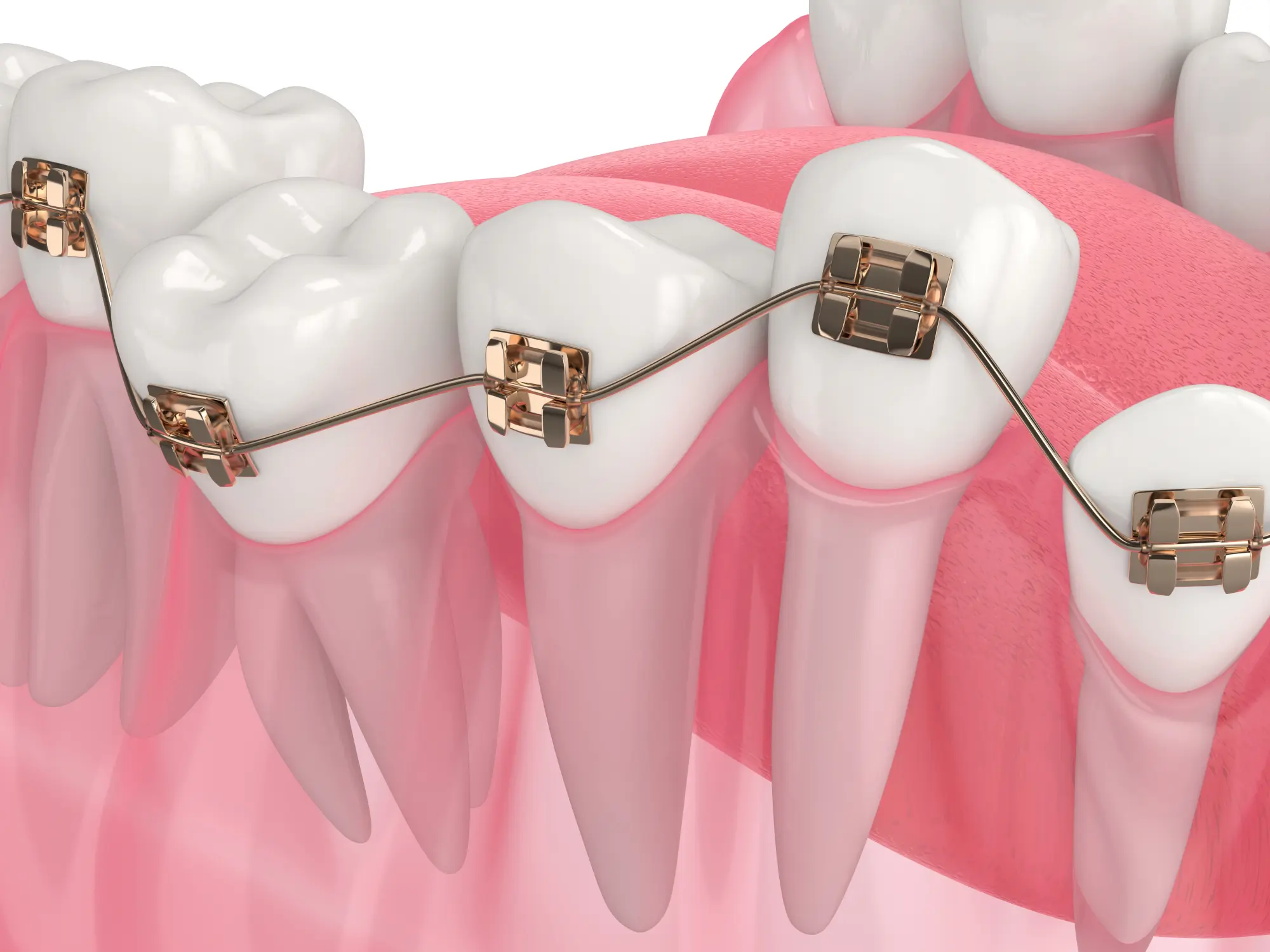
Traditional braces are fixed to the teeth. Brackets are attached to each tooth, and a wire connects them. Over time, we adjust the wire and other components to guide the teeth into alignment. Since braces are always in place, they provide constant force and do not depend on the patient remembering to wear them.
There are different challenges with each option. With braces, a patient may occasionally have a broken bracket or poking wire. With aligners, a patient may lose or break a tray. With braces, patients need to be careful with sticky, hard, or chewy foods. With aligners, patients need to clean both their teeth and their trays very consistently.
There is no one-size-fits-all answer. The better option depends on the patient’s smile, treatment goals, age, responsibility level, and the type of movement we need to achieve.
Hygiene matters with every orthodontic treatment
Good oral hygiene is important no matter which orthodontic option you choose. Braces and aligners both require patients to be thoughtful about keeping their teeth clean.
With clear aligners, patients need to brush before putting the trays back in. If food or sugar gets trapped under the aligners, it can increase the risk of cavities or staining. The aligners themselves also need to be cleaned regularly. For younger patients, this can be a lot to manage throughout the day.
With braces, patients do not have to remove or clean trays, but they do need to brush carefully around brackets and wires. Food can get stuck around braces, so brushing and flossing take a little more time and attention.
At Happy Braces Orthodontics, we help patients understand exactly how to care for their teeth during treatment. We show them how to brush around brackets, how to floss with braces, and how to keep their smile healthy from start to finish. Our goal is to make the process feel manageable, not overwhelming.
What to expect when getting traditional braces
Getting braces is a step-by-step process, and we make sure patients and parents understand what is happening at each stage.
The first step is the orthodontic consultation. During this visit, Dr. Santos or Dr. Yousefi will evaluate the teeth, bite, jaw relationship, and overall treatment needs. We also talk with the patient and parents about goals, concerns, and which treatment options may be appropriate.
From there, we take records and measurements. These may include photos, digital scans, X-rays, and other information that helps us plan treatment in detail. These records allow us to see where the teeth are now and map out how we want them to move.
Once the treatment plan is ready, we bond the brackets to the teeth. The brackets are the small metal pieces that sit on the front of each tooth. Then we place the wire, which helps guide the teeth into better alignment.
After braces are placed, patients come back for regular adjustment or activation visits. These visits usually happen every four to eight weeks, depending on the treatment plan. During these appointments, we may change the wire, adjust the force, check progress, and make sure everything is moving the way it should.
These visits are an important part of treatment because they allow us to guide tooth movement gradually and safely.
Can braces be customized for comfort?
Yes. Traditional braces are not one-size-fits-all.
One of the benefits of braces is that we can customize the mechanics based on each patient’s needs. For some patients, especially those who are more sensitive, we may use more flexible wires at certain stages of treatment. This allows us to apply gentle force and help the teeth begin moving more comfortably.
As treatment progresses, we may change the wires and adjust the force little by little. Orthodontic movement works best when it is controlled and steady. We do not want to rush the process in a way that creates unnecessary discomfort or affects the health of the teeth and gums.
We also customize treatment based on the type of movement needed. Some patients need more space. Some need teeth rotated. Some need gaps closed. Some need bite correction. Braces give us the ability to adjust the plan as the smile changes.
Making braces more fun for kids and teens
We know that getting braces can feel like a big milestone, especially for kids and teens. Some patients are excited. Some are nervous. Some are not quite sure how they feel yet.
That is completely normal.
One way we help patients feel more engaged is by making the process more fun. With traditional braces, patients can choose different colors for their elastics. Some like to pick their favorite color. Some choose school colors. Some change them for holidays, sports teams, or special events.
It may seem like a small thing, but it can help patients feel more involved in their treatment. When kids feel like they have a choice and can show a little personality, braces can feel less intimidating and more exciting.
We also believe encouragement matters. Orthodontic treatment is a process, and patients do better when they feel supported. We want every patient to feel proud of the progress they are making along the way.
Why progress can feel so rewarding
One of the most rewarding parts of braces is seeing visible changes during treatment.
Sometimes a patient starts with a gap between the front teeth, and they begin to notice that the space is closing. Sometimes severe crowding starts to look milder within the first part of treatment. Sometimes a patient who was self-conscious about their smile starts smiling more openly because they can see things changing.
Those moments are exciting for the patient, the parents, and our team.
At Happy Braces Orthodontics, we also use progress records to help patients see how far they have come. It can be easy to forget what the smile looked like at the beginning, especially when changes happen gradually. When patients see their starting photos next to their current progress, it can be incredibly motivating.
That motivation matters. When patients see that treatment is working, they often feel more excited to keep going. They become more engaged, more confident, and more committed to taking care of their braces.
How parents and patients can decide between braces and aligners
Choosing between braces and clear aligners is a personal decision, but it should also be a clinical decision. That is why we always recommend starting with a consultation.
During the consultation, we look at the type of movement needed, the patient’s age, the complexity of the case, and the level of responsibility required for each option. We also talk honestly with families about lifestyle.
For example, if a younger patient really wants clear aligners but the parents are worried they will lose them or forget to wear them, that is an important conversation. If a patient has a more complex case that requires significant movement, we may explain why braces could offer better control. If a patient is highly responsible and has a case that aligners can treat well, clear aligners may still be a great option.
The goal is not just to choose the option that looks best on day one. The goal is to choose the option that will help us achieve the best result as predictably as possible.
FAQs about traditional metal braces
Are metal braces better than clear aligners?
Metal braces are not automatically better than clear aligners, but they may be better for certain patients. If a patient needs more complex tooth movement, braces may give us more control. If a younger patient may struggle with compliance, braces may be more predictable. Clear aligners can still be an excellent option for patients who are responsible, consistent, and a good clinical candidate.
Do braces work faster than aligners?
Sometimes braces can move teeth more efficiently, especially when a case requires a lot of movement, sliding mechanics, or careful root positioning. However, treatment time depends on the patient’s specific needs. What matters most is choosing the treatment that gives us the right type of control and predictability for that smile.
Are braces a good option for kids?
Yes. Braces are often a great option for children and teens because they stay in place and work continuously. Patients still need to brush well, avoid certain foods, and come to their regular appointments, but they do not have to remember to wear or keep track of removable trays.
Find the right orthodontic option in La Mirada, CA
At Happy Braces Orthodontics in La Mirada, CA, Dr. Santos and Dr. Yousefi are here to help you understand your options and feel confident about your next step. Whether braces, clear aligners, or another approach is the right fit, we will walk you through the process with honesty, warmth, and a treatment plan designed around your smile.
To schedule an orthodontic consultation, call Happy Braces Orthodontics at (562) 944-8408. We would love to help you or your child start the path toward a healthier, more confident smile.